Containment Before Horsepower: Buying for Stone Cutting on a Customer’s Driveway
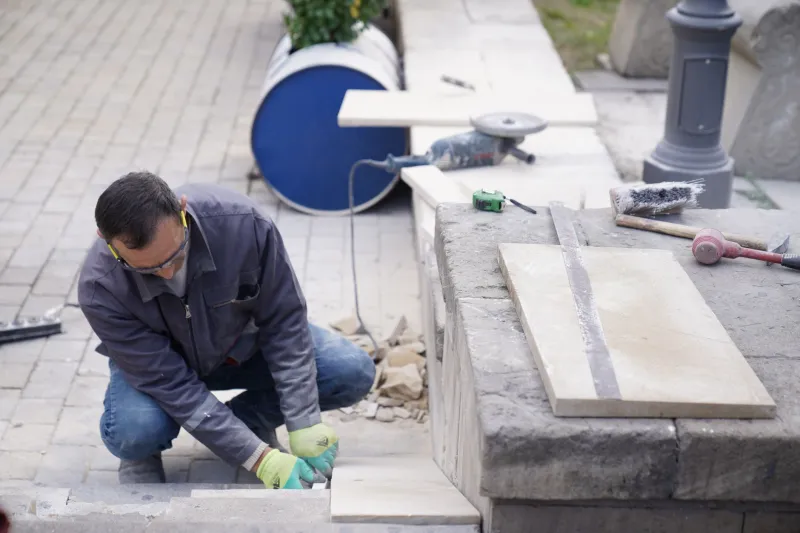
Cutting stone on a customer’s driveway is not a workshop job with a different postcode. The ground is uneven, the neighbours are close, the tap is usually somebody’s kitchen sink, and every bit of slurry you make is on show. That changes the shopping list. Before you look at saw specs, look at what happens to the water, the dust and the offcuts.
The driveway rewrites the priorities
In a workshop, containment is a habit. On a domestic site, it is the job. A tidy cut with a modest saw beats a fast cut with a brown river running towards the drain. The first buys for mobile work should be the boring ones: a cutting station that catches water, a means of keeping dust down, and a way to take the waste away without turning the van into a quarry.
This is not about gold-plating every job. It is about buying the kit that stops a small paving or doorstep job becoming a conversation with the customer, the neighbour and possibly the local authority.
Buy the containment layer first
A folding cutting station or a purpose-made wet-cutting tray is the single most useful purchase for driveway work. Look for something with a raised lip, a drain point and enough rigidity that it does not sag when you slide a heavy slab onto it. Cheap plastic trays are fine for light tile work but they flex, split and end up as a paddling pool.
Add a heavy-duty tarpaulin or spill mat underneath, weighted at the corners. Not a flimsy dust sheet. A proper mat with a bit of weight to it. On block paving or resin-bound driveways, a loose sheet is an invitation for slurry to creep underneath and stain the surface.
For dust, an on-tool extraction shroud and a suitable vacuum are worth more than a bigger blade. If you are cutting dry, buy the shroud to fit the saw you actually own, not the saw you might buy next year. A shroud that does not seal properly is just a plastic decoration.
The saw: buy small, hire big
For most domestic stone work, a compact wet saw or a rail-guided saw with a water feed will do the bulk of the work. Buy one that is easy to carry alone, fits through a side gate and has a water tray you can empty without wrestling it. If you only cut on site a few times a month, a decent hired saw for the heavy days and a smaller owned saw for the rest is a sensible split.
Hire the large stuff. A big bench saw, a floor saw or a slab lifter is rarely worth owning for domestic jobs unless it is earning every week. Hire charges are easier to price into a quote than a depreciating machine taking up van space.
Check the power before you fall in love with a saw. A 110V site saw needs a transformer and a bit of cable discipline. A 240V model may be simpler on some domestic supplies, but you still need RCD protection and a sensible lead route. Cordless saws are improving, but for wet cutting on a driveway, water and batteries still need a careful conversation.
Water: catch it, settle it, move it
Water is the part most mobile setups get wrong. You do not need a full recycling plant, but you do need a plan. A bunded tray under the saw, a settling bucket or a small settling tank, and a pump to move clean-ish water back to the blade will keep you from running back and forth to an outdoor tap.
Do not tip slurry down a surface water drain. In the UK, that is the sort of shortcut that can land you in trouble, and it is not fair on the customer either. Let solids settle, bag the sludge and dispose of it properly. If you are using a lot of water, a small submersible pump and a couple of containers will pay for themselves in fewer trips and less mess.
A simple gravity feed from a jerry can is enough for small jobs. Improvise there. Do not improvise the containment.
Power and leads on a domestic site
Domestic power is not a building site. Sockets are where the homeowner left them, outdoor sockets are a bonus, and extension leads become trip hazards the moment you turn your back. Buy good-quality leads, a residual current device and a cable ramp or two. A cable ramp is cheap compared with a claim for a trip in somebody’s driveway.
If you are running a 110V transformer, site it close to the work and keep leads short where you can. If you are using 240V, test your RCD before you plug in and keep the connection out of puddles. Generators are an option for off-grid jobs, but they bring noise and fumes. On a quiet residential street, that matters.
Waste: leave with more than you brought
Mobile cutting generates offcuts, slurry sludge and packaging. Have a system before the first slab comes off the van. Heavy-duty bags for offcuts, a sealed container for sludge, and a waste transfer note if you are removing controlled waste from the customer’s property. The rules are not glamorous, but they are part of the kit.
A foldable rubble sack frame or a small wheeled tub makes loading easier and keeps the customer’s driveway from looking like a builder’s skip by lunchtime. If you are cutting paving, keep the offcuts sorted. Some can be reused as edge details; the rest should leave with you.
Noise and neighbours
Stone cutting is noisy. There is no silent blade. What you can do is control when and where it happens. Avoid early starts and late finishes on residential jobs. Put a barrier between the saw and the nearest window if the job allows it. Use a sharp blade and a steady feed rather than forcing a dull one through the stone. A struggling saw screams; a sharp saw grumbles.
Tell the customer what you are doing and when. A two-minute conversation about the noisy bit of the day is cheaper than a complaint. If a neighbour has a baby, a night shift or a home office, you will usually get more leeway by acknowledging it than by pretending the driveway is a quarry.
A sensible buying order
Start with containment: a rigid cutting tray, a weighted spill mat, an extraction shroud and a decent vacuum. Then water handling: settling containers, a small pump and a bunded storage option. Then power: good leads, an RCD and cable ramps. The saw comes after that, sized to the work you actually do. Waste handling and noise control are not optional extras; they are part of the setup.
Buy the boring kit first. It is the difference between a professional mobile setup and a man with a saw on somebody’s block paving.