Buy the Pump, Not the Tank: Air Supply for Pneumatic Stone Tools
The compressor is the power station, not the accessory
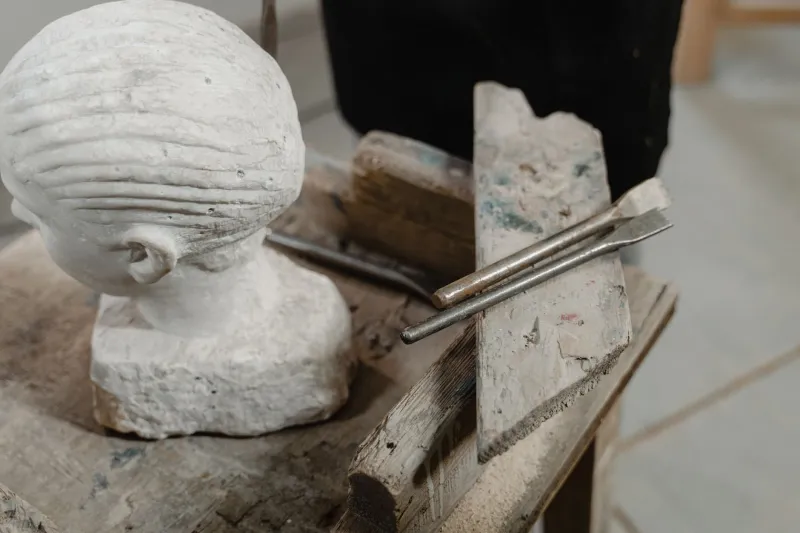
A pneumatic chisel feels simple. Air goes in, steel comes out, stone moves. The complicated bit is behind the wall or under the bench: the compressor. Buy the wrong one and the tool will hammer for thirty seconds, sigh, and wait for the tank to refill. Buy the right one and you stop thinking about air altogether.
That is the test. A compressor for a UK stone shop should be boring. It should sit in the corner, cycle when it needs to, and never become the reason a job stalls. The mistake is buying on tank size because litres are easy to see. The thing that keeps a chisel working is free air delivery, duty cycle and a sensible idea of how many tools are running at once.
Start with the tool plate, not the brochure
Before you look at compressors, collect the air demand figures for every pneumatic tool you own or plan to own. A stone chisel, a die grinder, a needle scaler, a blow gun, maybe a small drill. The plate or manual will give a consumption figure, usually in CFM at a stated working pressure. UK spec sheets often mix CFM and litres per minute, and some quote at 6 bar while others quote at 6.2 bar or 90 psi. Convert them to one unit and one pressure before you compare anything.
A typical pneumatic chisel might want something in the region of 4 to 8 CFM at working pressure. A die grinder can be similar or higher. A scaler may be lower but still not free. These are illustrative figures, not a substitute for the actual plate on your tool. The point is that one chisel is not the same as one compressor rating. The compressor has to supply the tool at the pressure the tool needs, continuously, while the tool is being used.
Add up what runs together
This is where most buying decisions go wrong. A shop buys a compressor rated at 14 CFM, then runs a chisel and a grinder from a two-person bench. Each tool pulls 7 or 8 CFM. The arithmetic is not kind. The receiver empties, the pump runs flat out, pressure drops, and the tools go soft.
Work out simultaneous demand. If one person is working, the highest-demand tool plus a margin is a reasonable starting point, because the receiver can cover short bursts and tool changes. If two people are working, add the two tools that are likely to run together. Then add a margin for pressure drops, filter restrictions, ageing pumps and the fact that a compressor working at its limit is not a happy compressor. Twenty to thirty per cent headroom is not extravagance. It is what stops the pump from running hot all afternoon.
FAD is the number that matters
Free air delivery, usually shortened to FAD, is the volume of air the pump actually delivers at a stated pressure. Displacement is not the same thing. A compressor can have a large-sounding displacement figure and a much smaller FAD figure once the pump is working at pressure. If a seller cannot tell you the FAD at 7 bar, treat the headline number with suspicion.
Tank size is a buffer. A 100-litre receiver can give a useful burst for a nail gun or a short chisel run, but it cannot turn a 5 CFM pump into a 10 CFM pump. Once the stored air is gone, the tool is living on the pump. That is why a large tank on a small pump is often the worst of both worlds: slow to fill, heavy to move, and still unable to sustain a working chisel. If you have to choose between a better pump and a bigger tank, buy the pump.
Duty cycle and heat
Cheap piston compressors are often built for intermittent use. The duty cycle might be 50 per cent, meaning the pump needs as much time resting as it spends running. Stone work does not always respect that. A chisel can run for long stretches, especially on a stubborn lintel or a bank of mortar. If the compressor is undersized, it will run beyond its duty cycle, get hot, and either trip out or wear out early.
A screw compressor can run continuously, but it costs more and takes up more space. For many smaller UK stone shops, a well-sized piston compressor with a realistic duty cycle is the sensible middle ground. Keep the cooling fins clean, because stone dust loves a hot pump. Put the compressor somewhere with airflow, not in a sealed cupboard beside a bucket of slurry.
Receiver size: useful, not magical
For one user running a chisel or a small grinder, a receiver in the 50 to 100-litre range is often enough to smooth cycling and cover short bursts. For two users, or for tools that demand a lot of air, 150 litres or more starts to make sense. But bigger is not automatically better. A huge receiver takes longer to fill, takes up floor space, and can encourage people to buy a small pump and hope the tank will hide the problem.
Think about the work pattern. If the tool runs for ten seconds and rests for a minute, a receiver earns its keep. If the tool runs for five minutes at a time, the pump has to be able to keep up. The tank is not a substitute for capacity.
Air treatment, because British air is damp
Compressed air carries water. In a UK workshop, especially an unheated one, that is not a theoretical problem. Water in the line will emulsify oil, corrode tools and spoil finishes. Fit a proper water trap and filter, and drain the receiver regularly. An auto drain is a small luxury that pays for itself if you are the sort of shop that forgets.
Pneumatic chisels usually want a little lubrication, so check the tool manual and use a lubricator or in-line oil where specified. Keep oil out of lines used for blow-off or any finishing work. A simple air treatment setup, matched to the tools, is cheaper than replacing a seized chisel.
Noise, power and the neighbours
Pneumatic tools are loud, and so are compressors. A piston compressor can easily hit 90 dB or more at close range. Hearing protection is not optional, and neither is thinking about where the noise goes. If the shop shares a yard or sits near housing, an early-morning compressor start can become a complaint. Low-noise models and a sensible siting plan are worth considering before you buy.
Check the electrical supply too. A compressor that needs a 16 amp supply will not be happy on a 13 amp plug, and extension leads are not a workaround. In 2026, it is still worth matching the compressor to the supply you actually have, not the supply you vaguely intend to install one day.
A practical buying checklist
Write down the tools and their air demand at working pressure. Add up the tools that run together. Add a margin. Compare compressors on FAD at pressure, not tank litres alone. Check the duty cycle against your longest realistic run. Choose a receiver that suits the work pattern and the floor space. Budget for filtration and drainage. Check the noise level and the electrical supply. Then ask how easy it is to service, because a compressor is a long-term relationship.
A stone shop does not need the most impressive compressor on the pallet. It needs the one that keeps a chisel sharp and a grinder spinning without drama. Buy the pump, give it clean air and a bit of space, and the tank will do its quiet job in the background.