Route the Water Before You Cut the Stone: A Wet-Processing Plan for UK Workshops
Most small stone shops buy the saw first and solve the water later. A hose, a bucket and a drain gully get the first few jobs done. Then a quartz worktop or a run of limestone arrives, the sump fills with fines, the pump clogs and the drain starts to smell like a pond. The water side of wet cutting is not plumbing garnish. It decides whether the blade lasts, whether the shop stays clean and whether the water company takes an interest.
This is a buying guide, not a design manual. The aim is to help you specify kit you can actually maintain, in a UK workshop, without turning a drain into a compliance problem.
Size the pump against the real circuit
Pumps are usually sold on a flow figure measured at zero head. That number is close to useless once the water has to climb out of a sump, pass through a filter, travel down 10 metres of hose and push through a blade housing. Look for a pump curve and pick a model that still delivers the tool maker's recommended flow at your actual lift and pipe run.
Too little flow and the blade runs hot, segments glaze and dust control suffers. Too much and you get mist, splash and a wet shirt by 9am. Fit a gate valve or a simple flow indicator so you can trim the supply. Keep the pump out of the raw slurry: put it in a clean sump after settlement, not in the tank where the saw is dumping fines. A float switch and run-dry protection are worth having. So is a strainer you can remove without a spanner.
For electrical safety, use an RCD-protected supply and equipment rated for a wet environment. Keep cables out of the splash zone and give the pump its own isolator. Water and electricity can share a workshop, but they should not share a socket.
Treat the sump as a settling chamber
A bucket with a pump in it is not a water management system. A proper sump slows the flow, lets solids drop and gives you somewhere to clean. Baffles help. A weir helps more. A removable sediment tray turns a nasty job into a five-minute one.
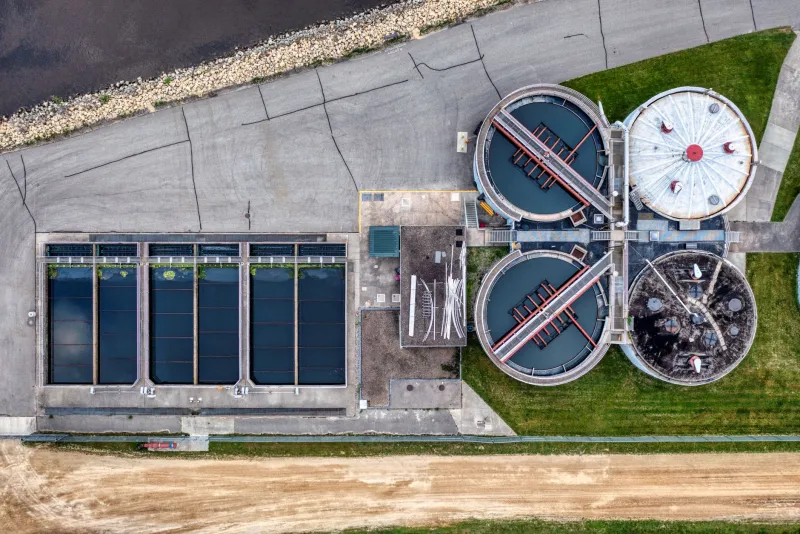
Aim for a primary tray or tank where slurry arrives, then a secondary chamber where the pump sits. The pump should draw from near the top of the clean end, not from the bottom where the silt gathers. Lid the tanks to stop splash and smells, and make sure you can get a wet vac or a shovel into every chamber. If the pump empties the sump in a couple of minutes, it is too small to settle anything; the water is just going round in a circle.
Two tanks usually beat one
For a small shop, a two-stage system is often the sweet spot: a reception tank with a coarse basket, then a pump tank with a finer screen. Three tanks are better if you have the floor space and the work to justify it. The point is dwell time. Water needs to sit long enough for the fines to drop, not race from blade to pump.
Size the tanks around the job, not the catalogue. A 200-litre tub is not a settlement tank if a big saw empties it before lunch. Leave room for sludge, and plan how you will empty it without spilling it down the yard. Removable baffles and a flat floor make cleaning easier; rounded bottoms and fixed lids look tidy but fight you every time.
Mains-fed, recirculating or hired
Mains-fed is the cheapest kit and the most expensive habit. You need a reliable supply, a hose that does not become a trip hazard, and a lawful route to discharge. Once-through water is fine for a quick site job, but in a shop it adds up. Do the arithmetic with your own bill: a saw drawing 15 litres a minute for four hours uses 3.6 cubic metres a day. At a combined water and sewerage cost of several pounds per cubic metre, that is not pocket change over a year.
Recirculating systems cost more up front: tanks, pump, filtration, maybe a chiller if the water gets warm. Running costs are lower because you are not paying for fresh water every cut. The trade-off is maintenance. You will be cleaning screens, changing filter media and paying to dispose of sludge. That is still usually cheaper than a bad drain connection, but it is not free.
Hire is sensible for short jobs, one-off architectural pieces or a first venture into wet processing. Check what is included: pump, tanks, hoses, filters and delivery are sometimes separate line items. Ask who cleans the sludge and where it goes. A cheap hire rate with a dirty tank is not a bargain.
A hybrid arrangement, with mains top-up and a recirculating loop, can work in a small unit. It gives you resilience when a tank runs low without turning the tap into the main supply.
The drain is where good intentions fail
Stone slurry is not clean water. It contains fine solids and often raises the pH. Do not send it to a surface water drain, a soakaway or the road. In the UK, discharge to the foul sewer normally needs trade effluent consent from your water company, and they may ask for settlement, pH control or sampling. Rules differ across England, Wales, Scotland and Northern Ireland, so check with the relevant body rather than guessing.
If you are renting, get the landlord's permission before you alter drainage. Keep records of sludge removal and use a licensed waste carrier; the duty of care still applies to a bucket of stone fines. A silt trap before any drain connection is basic housekeeping, not a luxury. If the drain cannot take the load, the answer is a closed-loop system or a licensed disposal route, not a bigger hose.
A siting checklist for before the first cut
- Put the tanks on a level, bunded area with room to clean them.
- Check the floor loading and keep the electrical supply above the splash line.
- Confirm the pump delivers the required flow at the real head, with the filter in place.
- Fit a float switch, a strainer and an isolator you can reach.
- Keep hose runs short, swept and off the walkway.
- Provide lids, baffles and removable sediment trays.
- Know exactly where every drain goes and what consent covers it.
- Have a sludge disposal route and a waste transfer note before you need one.
- Protect the system from frost or drain it down in cold weather.
- Commission with clean water, check for leaks and mark the valves.
None of this is glamorous. But a wet saw with a bad water plan is a dust suppressor that creates a waste problem. A wet saw with a good one is a tool you can run all day without wondering whether the drain will take it. Buy the pump for the circuit, buy the tanks for the cleaning job, and sort the discharge before the first slab goes on the table.