Marry the Battery, Date the Bare Tool: A Cordless Platform Plan for Stone Work in 2026
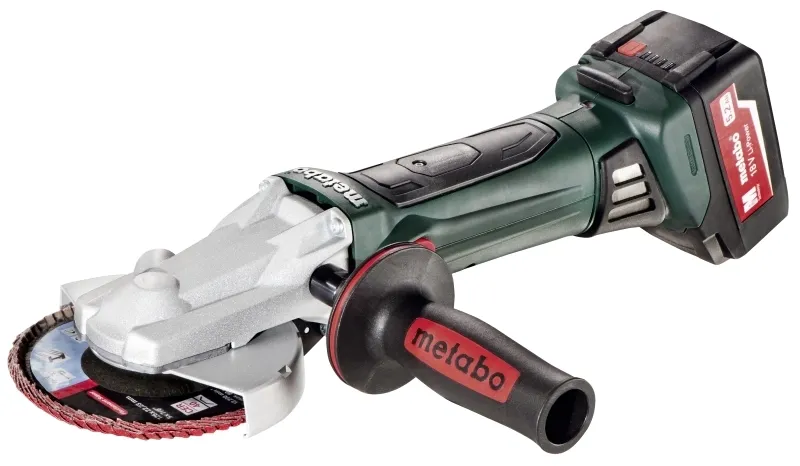
Photo: Team Metabo OS, CC BY-SA 3.0, via Wikimedia Commons
Walk into any tool shop in 2026 and the bare-tool stickers are doing the heavy lifting. A grinder body at a tempting price, a core drill with no charger in the box, a cutoff saw that looks like a bargain until you realise the battery costs more than the tool. This is how stone shops end up with a shelf of orphan batteries and a charger bag that looks like a jumble sale.
Cordless kit has earned its place on UK stone jobs. It gets you away from trailing leads, awkward transformer placements and the dance around a wet core drill. But the platform decision is not the same as the tool decision. You can date a bare tool. You marry the battery.
Start with the tools that actually bite
A cordless drill driver is not the centre of a stone shop. The tools that matter are the ones that pull real current and run for long enough to be useful: 115mm and 125mm angle grinders, core drills, small cutoff saws and maybe an SDS hammer for fixings and chasing. Those tools tell you what the platform needs to deliver.
Look at the workload, not the catalogue headline. A grinder cutting sandstone lintels or chasing mortar joints wants a high-output battery, not the smallest pack that will physically fit. A core drill running a diamond core through engineering brick wants torque and thermal headroom. A cutoff saw used on paving and block wants a battery that can survive repeated heavy drains without cooking itself.
That is why buying a platform because the drill driver felt nice in the shop is backwards. The drill driver is the easy part. The grinder and the core drill are the tests.
Runtime is not a sticker on the box
Battery amp-hours get treated like a horsepower figure. They are only half the story. Watt-hours give you a better sense of stored energy, and the tool's efficiency decides what actually reaches the spindle. A 5.0Ah pack on one platform is not the same as a 5.0Ah pack on another, and a high-output pack can behave very differently from a standard one under a grinder's load.
Ignore the urge to buy the biggest pack for everything. Big batteries are heavy, and a top-heavy grinder is miserable at head height or on a ladder. A sensible stone kit usually mixes pack sizes: compact packs for lighter cutting and drilling, high-output packs for the grinder and core drill. The platform needs to offer both, not just one hero battery.
Water, dust and the slow death of a good battery
Stone work is filthy. Dust gets into every switch and vent, and wet core drilling puts water exactly where a battery manufacturer would rather it did not go. A platform that suits a joinery shop may not suit a stone bench.
Look for sealed battery interfaces, decent ingress protection where it is claimed, and covers that actually stay put. More importantly, adopt habits that keep the kit alive: blow down the contacts, wipe the battery before it goes on the charger, and never charge a damp pack straight off a wet job. Let it come up to room temperature and dry off first.
Cold is the other quiet killer. A battery left in a van overnight in February will not give you its best, and charging a frozen pack is a bad idea. If the van is your workshop, think about how you will keep batteries out of the worst of the cold and damp.
Charger logistics are part of the platform
A cordless platform is not just batteries and tools. It is the charger routine. On a UK site, you may have 240V in the site cabin, a 110V supply for tools, or a generator that is already unhappy about the kettle. Check that the charger will run from the supply you actually have, and do not assume a 110V transformer is the right feed for a battery charger unless it is rated for it.
One charger is rarely enough for a stone shop. Two batteries and one charger is a hobby setup. For real work, aim for enough charging capacity to keep a rotation going: one pack on the tool, one cooling, one on charge. Four-port chargers are useful in a workshop, but on site a couple of single chargers can be more flexible and less of a single point of failure.
Fast charging is handy, but heat is the enemy. If the charger is fanning away like a hairdryer, the pack is working hard. Give batteries a chance to cool before they go back on charge, and do not leave them baking on a sunny windowsill or next to a hot cutting area.
The orphan battery tax
This is the bit the bare-tool deals do not mention. Every platform you add creates a new charger, a new set of batteries and a new set of spares. A cheap bare tool is only cheap if you already own the batteries and charger. Otherwise it is the start of a second platform, and the second platform is where the shelf-space tax begins.
Adapters exist, and some are better than others, but they are a workaround, not a strategy. They add bulk, can interfere with battery communication and often leave you with warranty questions. For a trade kit that gets used hard, pick one main platform and be honest about whether a second one is genuinely needed.
A sensible way to commit
Start with an audit of the cordless stone tools you actually run or plan to run over the next two years. Write down the grinder sizes, the core drill, the cutoff saw and any SDS work. Then check which platforms offer those tools with high-output batteries, sealed interfaces and sensible charger options. Look at dealer support and battery availability, not just the launch promotion.
Buy the first tool as a kit with two batteries and a charger. Add bare tools only when the platform has already proved itself. Keep a note of which packs are high-output and which are compact, so the right battery goes on the right tool. And resist the urge to buy a third platform because one bare tool was twenty quid cheaper.
There is no perfect cordless platform for every stone shop. But there is a sensible one: the platform that supports the grinders, core drills and cutters you rely on, with batteries you can actually afford to replace. Choose that first. The bare tools can follow.