Old Walls, New Tools: Buying for Listed Stonework Without Paying for 'Heritage' Hype
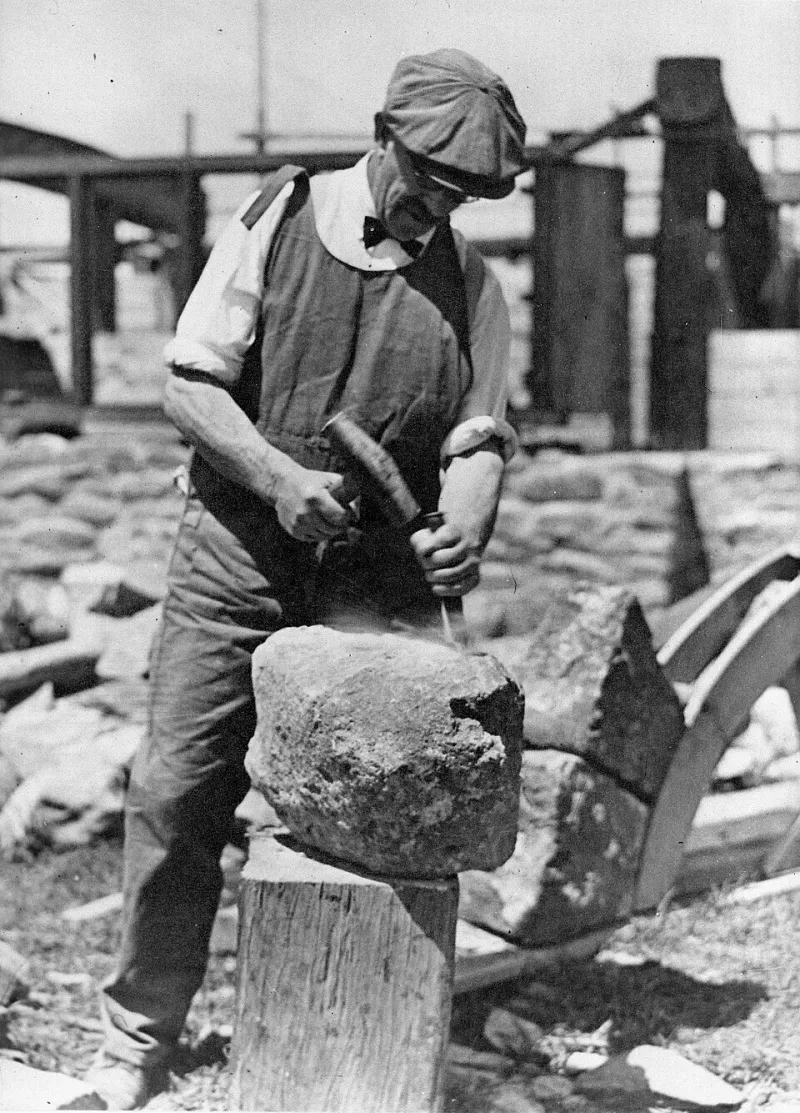
Photo: James Walter Chapman-Taylor (1878-1958), Public domain, via Wikimedia Commons
Listed building work is not a different religion, but it is a different conversation. A church tower, a stone cottage with walls that have moved since the Tudors, or a boundary wall held together by lime mortar and habit will not thank you for the same approach you would take to a new-build stone clad. The tools still have to cut, chase, dress and finish. The difference is that the work is often delicate, access is awkward, and the cost of getting it wrong is measured in conservation officers, scaffolds and reputations.
That does not mean you need a separate van full of specialist kit. It means you need to buy on specification rather than story. Here is where standard trade-grade stone tools are fine, where specialist money is justified, and what to ask before you pay.
Separate the building from the brochure
Heritage branding is a wonderful thing for marketers. A tool can be described as traditional, conservation-grade or suitable for historic fabric without telling you much about vibration, bit geometry, dust extraction or service life. Start with the building instead. Is the stone limestone, sandstone, flint or a mix? Is the mortar lime-based and soft? Are you dressing new stone to match, cutting out failed mortar, or making a small structural repair? Is the work at bench height or up a scaffold with a 110V lead trailing behind you?
Those questions dictate the tooling far more than a label. A reversible pneumatic tool might be excellent for careful mortice work in a church porch and completely wrong for a cottage wall where the stone is hard, ragged and full of flint. Standard trade-grade kit can be perfectly appropriate for cutting and dressing new stone that matches the original, provided the specification is right and the operator knows when to stop.
Chisel profiles that earn their place
For hand and light pneumatic work on listed stone, a small set of well-chosen profiles will do more than a giant roll of novelty shapes. A flat chisel is the workhorse for general dressing and cleaning up a bed. A bullnose is useful for opening out mortar joints and working into rounded details without digging corners in. A point is for breaking out, but it is also the quickest way to leave a mark you did not intend, so use it with care. A claw or comb chisel can help with textured finishes, though it is easy to overdo on soft stone. A bolster is for splitting and trimming, not for cosmetic work.
Lettering and carved detail are their own discipline. If you only occasionally cut a date or a simple inscription, buy the few profiles you need for the job rather than a full 'heritage' set that will sit in the van. If you do it regularly, spend the money on consistent geometry, good steel and a supplier who can replace a single chisel without selling you a box.
Reversible tooling: useful, not magic
Reversible tooling is genuinely helpful in delicate work because it lets you change the cutting end without changing the whole tool. That can mean less downtime on a scaffold, fewer tools on the go and a lower chance of losing the one bit you actually need. It is particularly useful for conservation-style work where you might move between pointing, dressing and cleaning in a small area.
But reversible does not automatically mean better. Check the locking mechanism. Is it positive, easy to clean and hard to knock loose? Can you get replacement tips or chisels in the profiles you actually use? Does the tool feel balanced with the bit fitted, or does it become nose-heavy and tiring after twenty minutes? A reversible system with a weak lock or an odd proprietary bit is just a more expensive way to be stuck.
Low vibration is a buying spec, not a badge
Low-vibration preparation matters on heritage work for the same reason it matters everywhere: hands and arms do not care how old the wall is. But 'low vibration' needs to be a measurable, checkable feature, not a phrase on a website. Ask for vibration emission data, check the tool is suitable for the duration and style of use, and think about anti-vibration gloves and rotation of tasks. On smaller hand tools, sharp edges and correct technique often reduce vibration more than a fancy label.
For powered preparation, especially in confined spaces or up a scaffold, consider whether a lower-vibration hammer or a smaller tool with a lighter touch will do the job. Sometimes the best low-vibration strategy is to use a hand tool for the last few millimetres rather than a bigger machine for speed. That is a buying decision as much as a working one.
Dust control has to fit the tool and the room
On church and cottage work, dust control is not just a COSHH box-tick. You may be working in a listed interior, near pews, in a small porch or against a wall that cannot be washed down. On-tool extraction or water suppression needs to be compatible with the tool, the bit and the access. A grinder with a bulky shroud may not fit between a window reveal and a scaffold board. A water-fed core bit may be brilliant on a bench and awkward halfway up a tower.
Ask whether the tool has a proper extraction port, whether the shroud is adjustable without tools, and whether the hose route will snag on the way up a ladder. If you are hiring, check that the hire shop has the right extraction kit with the tool, not just the drill. M-class vacuums and suitable filters are not optional extras when the dust is silica-bearing.
Where standard trade-grade kit is fine
You do not need to rebuild your entire kit for every listed job. Standard trade-grade grinders, routers, core drills and hand tools are fine for much of the cutting, chasing and dressing work, provided they are well maintained and matched to the material. A decent 110V grinder with the right blade and a sensible operator will do a lot of legitimate work on new stone for a heritage project. The same goes for basic measuring, marking and lifting kit.
The premium should go where the risk is. That usually means the cutting edge, the control of vibration, the dust interface and the ability to work accurately in awkward positions. Paying extra for a standard grinder because it has a picture of a church on the box is not a specification.
Where specialist money is justified
Specialist tooling earns its keep when it solves a real problem: a reversible tool that lets you work in a tight porch without changing machines, a low-vibration hammer that keeps a two-day job within sensible exposure limits, a set of chisels with consistent geometry for matching mouldings, or a core bit that cuts cleanly without blowing the face off soft stone. Those are buying decisions you can defend.
It is also worth paying for availability of consumables. A specialist tool with a unique bit that takes a fortnight to arrive is a liability on a listed job with a scaffold up. Ask what happens when the tip goes or the locking collar wears out.
Buying questions to ask before you pay
What is the vibration emission figure, and what duration of use is it rated for? What chisel profiles or bit sizes are available off the shelf in the UK? Does the dust extraction shroud fit the tool and the access you have? Can you get spare parts, or is the whole tool disposable? Is the tool comfortable and balanced for the way you will actually hold it? And finally: would you be happy using this on your own house, or are you buying it because the catalogue says 'heritage'?
The verdict
Listed stonework rewards good judgement more than a fancy tool roll. Buy standard trade-grade kit where it is honest and well specified. Spend the premium on low vibration, reversible control, dust compatibility and consistent cutting geometry. Then ignore the branding and get on with the wall.