A Stonemason’s Van Kit for Wet, Cold and Crooked British Sites
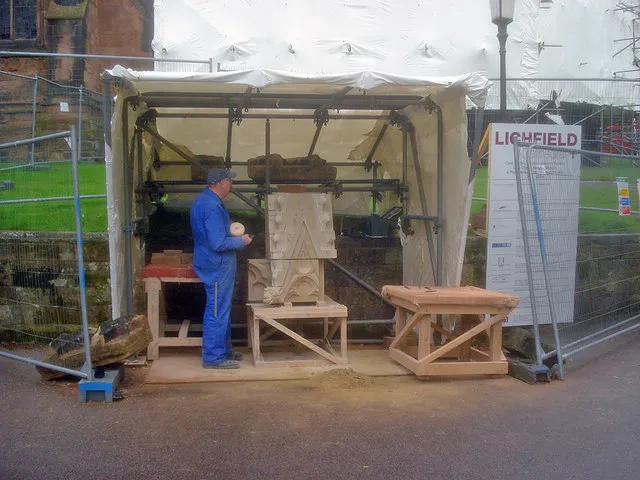
Photo: Trevor Rickard, CC BY-SA 2.0, via Wikimedia Commons
Building a stonemason’s kit from scratch is less about buying a catalogue and more about knowing which tools get picked up every day. On UK sites, the work is rarely clean or generous. You get damp Victorian brickwork, frosty mornings, heritage stone that does not want to be rushed, and access that makes a wheelbarrow look optimistic. In 2026, the sensible approach is to spend where the tool touches the stone or sets the line, and save where it only has to survive the back of the van.
At Kelso Stone Tools, we see plenty of kits that are either all budget or all boutique. Neither is much use. Here are twelve tools that earn their keep on a British site, with straight advice on where to put the money.
1. A forged lump hammer
A 2.5lb to 3lb lump hammer is the heartbeat of the kit. Buy forged, with a hickory or quality fibreglass handle, and check the head is properly wedged. A cheap cast head can mushroom and send splinters flying. This is a spend item: you will use it every day and a good one lasts years.
2. A 100mm brick bolster
For cutting bricks, blocks and softer stone, a 100mm bolster with a hand guard is the practical size. Buy one with a forged body and a decent edge that can be resharpened. Avoid the bargain-bin bolster that bends the first time you meet engineering brick. It is not a place to save.
3. A plugging chisel
Plugging chisels earn their money on repointing and heritage work, especially where mortar joints need cleaning out without wrecking the surrounding masonry. Look for a long, sturdy shank and a tip that keeps its shape. This is a small tool with a big influence on finish, so buy a known brand rather than a mystery online special.
4. A scutch chisel and spare combs
For dressed stone and heritage repairs, a scutch chisel is far more controlled than a bolster. The tool itself matters, but the combs matter just as much. Buy a holder that feels solid in the hand and keep a sensible stock of replaceable combs. Cheap combs wear quickly and leave you fighting the stone instead of shaping it.
5. A pointing trowel
Pointing trowels are personal. A 19mm to 25mm blade suits most repointing and small repair work, but the handle shape matters as much as the steel. Spend enough to get a trowel that feels balanced and does not cramp your hand after an hour. This is not the place for a shiny bargain that feels like a spoon.
6. A jointing iron
A jointing iron or pointer gives you a cleaner finish on mortar joints than a trowel alone, particularly on frost-sensitive work where the joint needs to be compacted properly. Buy a simple, well-finished iron with a comfortable handle. You do not need a drawer full of shapes, but you do need one that is straight, smooth and easy to clean.
7. A mixing paddle and a decent drill
Mortar mixing is where damp and frost conditions punish sloppy kit. A strong mixing paddle and a drill with enough torque will save your wrists and give a more consistent mix. Spend on the drill if you mix regularly; save on the paddle by buying a simple, well-made one rather than a gimmick. Keep the paddle clean and it will last.
8. A 115mm or 125mm angle grinder
For tight access and general site cutting, a 115mm or 125mm grinder is the workhorse. Buy a reputable model with a brake, a good guard and a dust port if you can. Cheap grinders vibrate, overheat and make accurate cutting harder. This is a spend item, but you do not need the biggest grinder in the shop — you need one that starts reliably and feels controlled.
9. The right diamond blade
A diamond blade is only as good as its match to the material. A general-purpose blade will struggle on hard sandstone, glaze on quartz, or wear out fast on abrasive limestone. In 2026, buy the correct blade for the stone you cut most often, and keep a second blade for rough work. This is where false economy bites hardest.
10. A wet stone cutter or a sensible hire plan
If you are cutting worktops, copings or large format stone, a wet cutter gives cleaner edges and less dust. If you only need one occasionally, hire a proper machine rather than buying a cheap bench cutter that wanders offline. For tight site access, a compact rail saw or a hired wet cutter can be more sensible than wrestling a large slab through a small doorway.
11. An M-class dust extractor
Silica dust is not a side issue. If you are cutting, grinding or chasing stone, an M-class extractor is a practical necessity, not a luxury. Spend here. A cheap vacuum with the wrong filtration is a false saving that follows you home in your lungs. Match the extractor to your tools and keep the filters and bags in stock.
12. A good 4ft spirit level
A straight, accurate 4ft level is still one of the most useful tools on site for setting lintels, copings and courses. Buy one that you can calibrate and that feels solid without being ridiculously heavy. Save on the novelty laser if you do not need one; a good level and a chalk line will handle most British site work.
Where to spend and where to save in 2026
Spend on the tools that touch the stone, set the line or protect your health: the lump hammer, bolster, plugging chisel, scutch, grinder, diamond blade, dust extractor and level. Save on buckets, mortar boards, brushes, tarps, marking pencils and spare handles. Buy consumables in sensible bulk if you have storage, and hire specialist machines for one-off jobs rather than filling the van with tools that sit idle.
The best starter kit is not the cheapest or the most expensive. It is the one that lets you turn up on a damp British morning, cut cleanly, point neatly and go home with the work done. Build it around the twelve tools above and you will spend less time replacing kit and more time earning with it.