Bargain Diamond Blades Are a Tax on UK Stone Fabricators
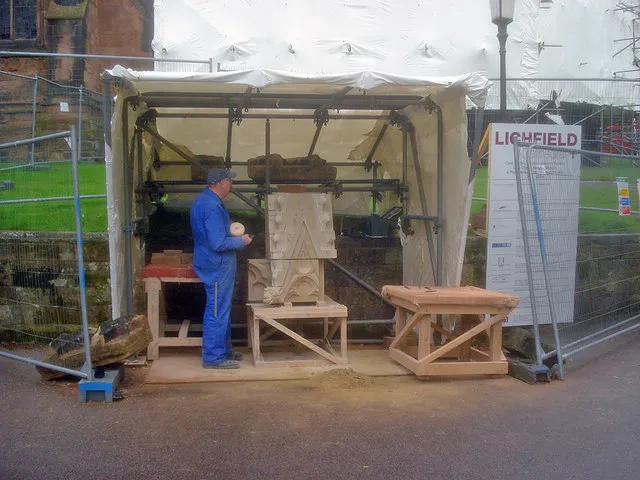
Photo: Hustvedt, CC BY-SA 3.0, via Wikimedia Commons
Cheap diamond blades are the tooling equivalent of a cheap pair of boots: fine until it rains, and then you are wet, cold and buying again. For UK stone fabricators, the real cost of a bargain blade rarely appears on the invoice. It turns up later as a slow cut, a chipped edge, a re-polish, a missed collection slot or a fitter standing idle on site. In 2026, with material prices still sharp and customers expecting tight turnarounds, that hidden cost is harder to absorb than ever.
This is an opinion piece, but it is based on a simple trade calculation: a blade is not cheap if it costs you a metre of progress. At Kelso Stone Tools, we would rather see a fabricator buy two or three correct blades than a drawer full of false economies.
The till price is the smallest number
The sticker price is easy to compare. The cost per cut is not. A budget blade might cost half as much as a trade blade, but if it cuts 25 to 40 percent slower, overheats, wanders or chips the edge, the saving evaporates before lunch. Add labour, machine wear, water and the time spent sorting out a poor finish, and the cheap blade can be the most expensive item in the workshop.
This is not an argument for buying the most expensive blade on the shelf. It is an argument for counting the whole job. A blade that cuts straight, holds its segment height and leaves a clean edge is doing more than cutting stone. It is protecting your schedule.
Scenario one: the quartz worktop that needed re-polishing
A fabricator buys a low-cost blade for cutting engineered quartz. The first few cuts seem fine. By the third worktop, the blade is glazing, the machine is labouring and the cut edge is chipping. The fitter spends extra time dressing the edge, the polisher has to rework the finish, and the job slips. The blade saved perhaps £30 at the counter. The rework cost several times that in labour alone.
Quartz and other engineered stones are not forgiving. They need a blade matched to the material, run at the right speed and used with enough water or extraction. A cheap general-purpose blade may survive the first cut and fail the tenth. On a worktop, the tenth cut is the one that matters.
Scenario two: the sandstone lintel and the slow cut
On the masonry side, a contractor uses a budget blade on abrasive sandstone. The blade feels sharp at first, then wears quickly and starts cutting offline. The operator pushes harder, the machine heats up, and the cut needs cleaning up with a grinder. What looked like a saving on a small blade turns into extra labour, extra dust and a worse finish.
Sandstone, limestone and other British stones vary enormously. A blade that suits one may glaze or wear out on another. The right bond and diamond quality matter more than the colour of the packaging. If you cut a range of stones, standardise on two or three blades that you trust and label them clearly.
What poor blades actually do
A cheap diamond blade does not usually fail dramatically. It fails quietly. It cuts slower. It heats the steel core. It produces more dust or slurry. It chips the edge. It vibrates. It loses tension. It may even shed a segment, which is a safety issue rather than a convenience issue. By the time the operator notices, the job has already cost more than the blade saved.
There is also the machine to consider. A labouring blade puts more load on the motor, the bearings and the water pump. Cheap tooling can shorten the life of expensive equipment. That is another cost that never appears on the blade receipt.
What to look for in 2026
Start with the material match. A blade for granite is not the same as a blade for sandstone, quartz or marble. Check the bond hardness, the segment height and the recommended wet or dry use. Look at the steel core, the flange quality and the maximum RPM. A blade marked to a recognised safety standard, such as EN 13236, is a baseline rather than a guarantee, but it is a useful filter.
Then ask about the diamond. Not all diamond grit is equal, and the cheapest blades often use lower-grade diamond or inconsistent concentration. You do not need a laboratory report, but you do need a supplier who can tell you what the blade is designed to cut and why. If the answer is that it cuts everything, treat that as a warning.
A straight buying framework
First, match the blade to the stone and the machine. Second, calculate cost per linear metre, not cost per blade. Include labour, machine time and likely rework. Third, standardise on a small number of trusted blades and track how long they last. Fourth, keep a cheaper blade for rough site work where finish does not matter, but do not let it near a finished worktop. Fifth, buy from a supplier who will ask what you are cutting rather than simply quoting the lowest price.
The framework is not complicated, but it requires a shift in thinking. The question is not whether you can afford a better blade. It is whether you can afford the downtime, rework and bad finish that come with the wrong one.
Where budget tooling can make sense
There is a place for budget blades. Rough cutting blockwork, opening up a chase or cutting something that is going in a skip is different from finishing a visible edge. If the cut is hidden and the material is forgiving, a cheaper blade can be a fair choice. The mistake is using the same blade for rough work and finished work, or assuming that a low price means a low total cost.
In 2026, UK stone fabricators are under pressure to be faster, cleaner and more competitive. Diamond blades are a small part of the overall job, but they sit right at the point where quality is won or lost. Buy for the whole job, not the till price. Your schedule, your machine and your fitter will thank you.